
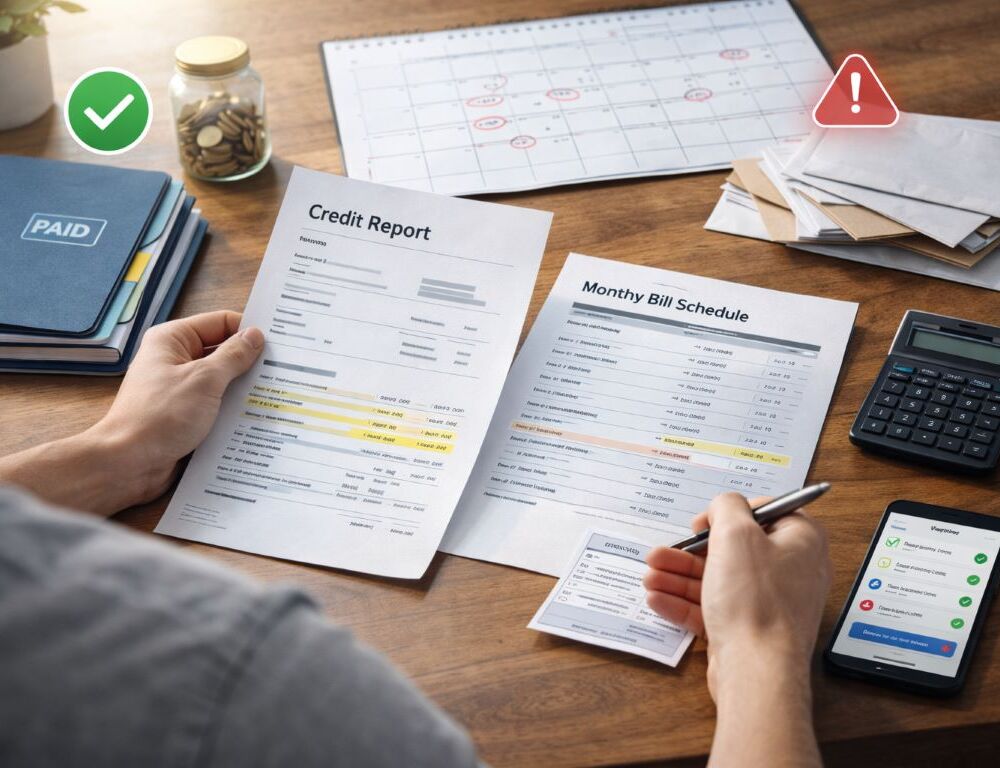
A credit history works like a reputation: it takes time to build and can be damaged by one “minor” late payment. Many people think about it only before a mortgage or a major purchase, when quick fixes aren’t realistic. Let’s break down what a credit history contains, which habits most often hurt it, and how to keep it healthy without turning your life into a finance project.
What counts as a credit history?
What information typically shows up?
It usually includes your loans and credit lines, credit card limits, payment timelines, late payments, account closures, and recent credit applications. It’s not just “do you owe money,” but how consistently you pay and how you use available credit.
Why can reports differ across bureaus?
Some markets have multiple bureaus and lenders may not report to all of them. If you can, checking more than one report can reduce surprises.
Is a credit score the same as a credit history?
Not exactly. Your history is the record of events. Your score is a calculated number based on that record. You can have a clean history but a modest score if your file is thin.
What mistakes most often damage a credit history?
Why does a small late payment matter?
Systems record the delay itself, not the reason. One slip may not define you, but repeated lateness looks like a pattern and reduces trust.
How does high credit utilization play into this?
If you consistently use a large percentage of your limit, it can signal financial strain—especially if balances stay high month to month.
What happens if you apply for credit too often?
Frequent applications can look like urgency. Even if you’re “just checking,” inquiry footprints may appear and can temporarily weigh on your profile.
How do you keep your credit history healthy month to month?
Which habits work best in real life?
- Autopay or reminders set 3–5 days early
- A buffer in your account to avoid “almost missed it” moments
- Paying at least the minimum on time, even if you plan to pay more later
- Reviewing statements weekly to catch surprises
And if you suddenly catch yourself thinking how to cancel a subscription in Google Play, do it right away so small recurring charges don’t disrupt your payment rhythm. These are small actions, but they create the steady pattern scoring models reward.
Why do terms matter, not just the payment amount?
A “small” payment can turn into a missed payment because of fees, conversion timing, or a service charge you didn’t notice. Reading terms helps you avoid that. If you’ve already learned how to read bank fees and stop overpaying, the same logic applies: footnotes and conditions can change the final outcome.
What if you don’t use your credit card at all?
A completely inactive account doesn’t always help. Some people keep a card lightly active with small purchases paid off on time, which maintains positive payment signals without real debt.
Table: common actions and likely impact
| Action | Possible impact | Safer approach |
| 1–3 day late payment | Recorded as lateness | Use autopay or reminders |
| High utilization | Can lower your profile | Keep balances below a portion of the limit |
| Many applications quickly | Looks like urgency | Space out applications |
| Closing an old card | Can shorten history | Close only when necessary |
| Reporting error | Damages your record unfairly | Check reports and dispute |
What if your credit history is already in rough shape?
Can you remove a negative mark?
Usually not if it’s accurate. But you can change direction: bring accounts current, pay down balances, stabilize on-time payments, and avoid new applications for a while.
How fast can improvement show up?
It depends on reporting cycles and the system. In most cases, consistent on-time months gradually shift your profile in a better direction.
What if you spot an error in your report?
Gather documentation and dispute it through the lender or bureau. Errors happen: a loan marked active after closure, a late payment posted incorrectly, or a mixed file due to similar personal data. Acting quickly and saving records helps.
Questions people ask before a big loan
How long does it take to rebuild credit?
Think in months, not weeks. Rebuilding is about stacking stable behavior and lowering risk factors, not one quick fix.
Does early payoff help?
It reduces debt, but it doesn’t automatically boost scores if payment behavior is inconsistent. Clean, on-time history is the foundation.
Should you take a loan just to build credit?
Sometimes, but only if terms are clear and you’re confident in your routine. It’s better to build slowly than to risk a missed payment for the sake of “credit experience.”
A strong credit history is a quiet routine: pay on time, keep balances manageable, and avoid unnecessary applications. When those habits are in place, you’ll be choosing the best offer—not trying to rescue your score at the last minute.