
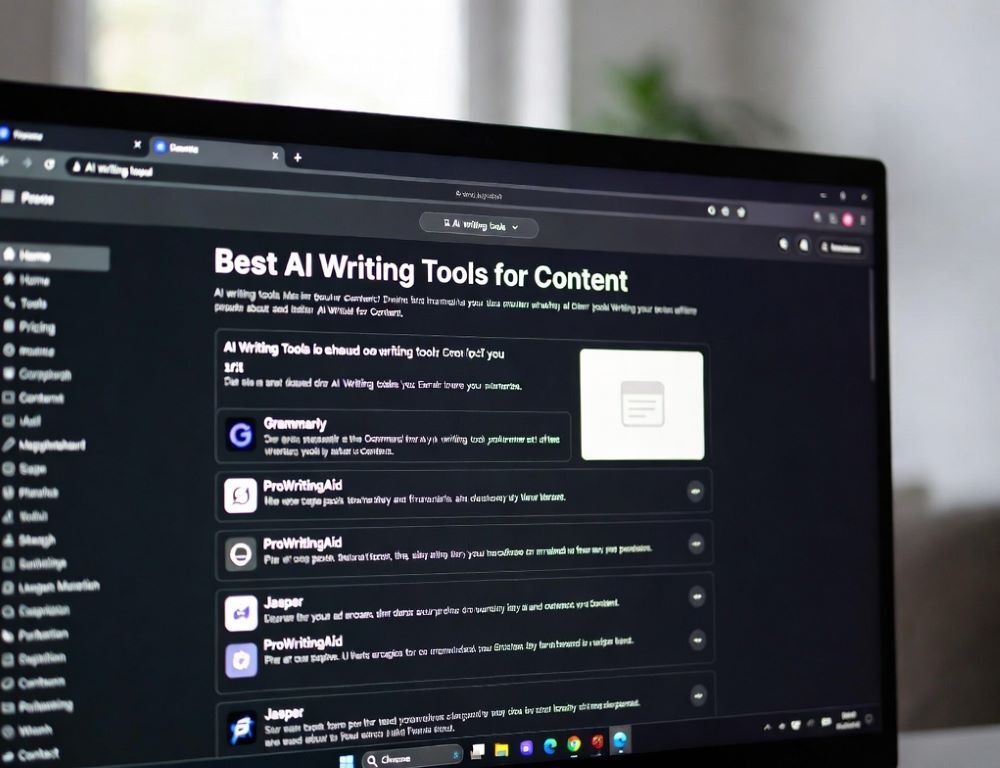
Best AI writing tools for content in 2026 help you draft fast, keep structure tight, and polish tone. A reliable setup is a small stack: a draft assistant + a style editor + a fact-check step.
- What kind of writing task do you have right now, and which tool category fits best?
- Which criteria matter most when choosing AI tools for writing and editing?
- What 15-minute test tells you if a tool is actually a good fit?
- What works best for drafting vs final polishing and QA?
- How do you set up a workflow that stays consistent over time?
- What mistakes make AI-written content look fake or less useful?
- What are signs you should involve a human editor or do manual verification?
What kind of writing task do you have right now, and which tool category fits best?
The best tool category depends on the writing task you need to finish today.
- Drafting from scratch (outline, sections, examples): a general chat-style writing assistant.
- Rewriting a paragraph without changing meaning: a rewrite/paraphrase mode.
- Cleaning readability and consistency: a grammar and tone editor.
- Checking claims and details: a research tool with search or manual verification.
Lock the outline first, polish tone last.
Which criteria matter most when choosing AI tools for writing and editing?
Choosing AI tools for writing and editing in 2026 comes down to control: can you repeat a good result tomorrow.
Can the tool edit surgically without rewriting everything?
Surgical edits matter when text contains numbers, product names, or strict terminology. Paste a paragraph with 3–5 hard facts and ask to “remove fluff without changing numbers or names.” The tool is fit for final edits if those facts stay intact.
Do you need search-backed checks for facts, names, and feature wording?
Search-backed checking matters when you write about prices, dates, UI labels, or product capabilities. If you do research inside Bing, Bing AI and Copilot setup and modes can help you pick the right mode. Validate claims against primary pages.
What 15-minute test tells you if a tool is actually a good fit?
A 15-minute test shows whether the tool is stable, not just impressive once.
- Give a 5–7 line brief (goal, audience, tone, constraints).
- Ask for H2/H3 questions that match the intent of the topic.
- Generate 200–300 words, then rewrite one paragraph in two tones.
- Ask for a 15% cut with no new facts added.
The tool passes if structure stays consistent, meaning does not drift, and filler does not creep back in after rewrites.
What works best for drafting vs final polishing and QA?
Drafting and final polishing work best when roles are separated.
| Stage | What to use | Two-minute check |
| Outline and draft | General writing assistant | Compare the outline to the brief for scope creep |
| Paragraph rewrites | Rewrite/paraphrase mode | Confirm meaning and key terms stayed the same |
| Final tone and grammar | Style and grammar editor | Read two paragraphs out loud for “robotic” phrasing |
| Fact check | Search-backed tool or manual check | Verify three claims on primary pages |
If you rely on one all-in-one tool, keep a checklist for facts and terminology.
How do you set up a workflow that stays consistent over time?
A consistent AI writing workflow in 2026 is a set of repeatable steps with quick validation points.
- Freeze a default brief: audience, tone, what not to do (no invented facts, no exaggeration, no fluff).
- Save 2–3 reusable prompts: outline, draft, paragraph edit.
- After each step, validate: facts, terms, structure, tone.
If labels differ by version, use in-app search or Settings search.
A more human finish usually needs one dedicated pass like “keep meaning, remove repetition, drop corporate phrasing,” and examples live in AI for writing: a human-sounding final draft.
What mistakes make AI-written content look fake or less useful?
AI-written content looks fake or less useful when constraints are vague and verification is skipped.
- Asking for “make it better” instead of a clear target (cut, de-duplicate, align tone).
- Accepting new numbers or claims without verification.
- Polishing tone before structure is locked.
After edits, re-check intent and facts, then read the first paragraph out loud.
What are signs you should involve a human editor or do manual verification?
Signs you need a human pass show up when the cost of a mistake is higher than the time saved.
- The content has legal, medical, or financial consequences.
- You use internal data that must match documents.
- The tool changes meaning or facts even after explicit constraints.
In those cases, keep the AI output as a draft and do the final pass with a human checklist.
Best AI writing tools for content in 2026 pay off when you split roles and treat fact checks as a first-class step.