
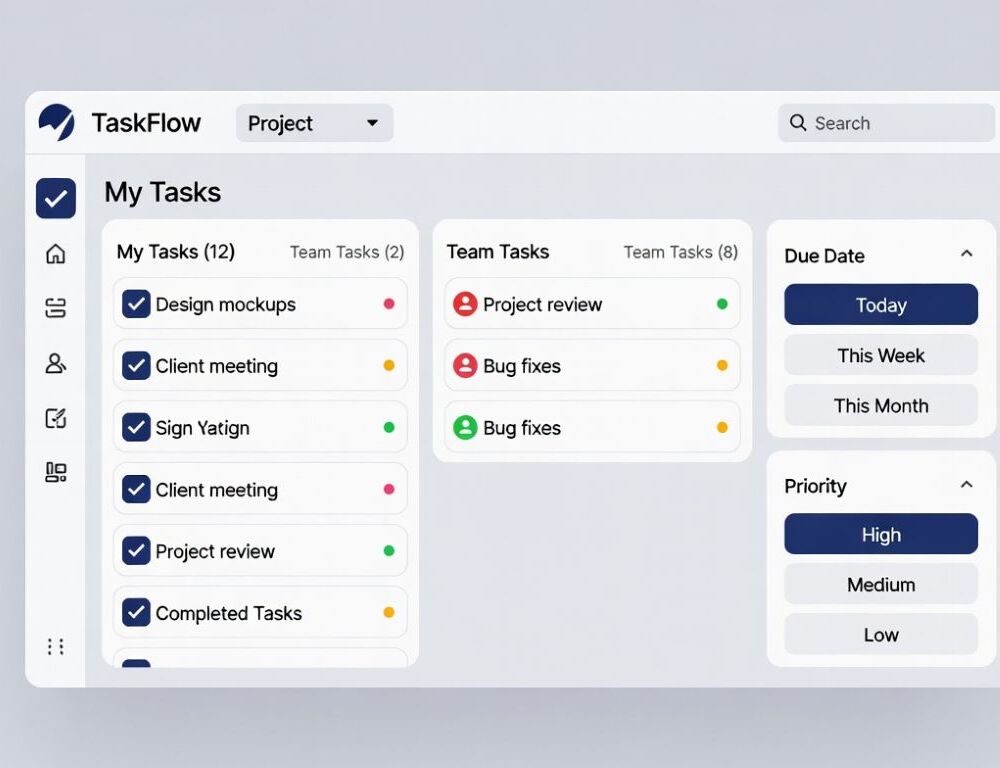
The best free task management app is the one that fits your workflow without hitting a “free plan wall” the moment you rely on it.
Start with a quick triage so you don’t migrate twice:
- Personal tasks: fast capture, recurring tasks, reminders, and search matter most.
- Team or family: shared spaces, comments, roles, and permissions matter most.
- Work that moves through stages: a Kanban-style board or clear statuses matters most.
- Time reporting: time tracking (or at least manual time fields) matters most.
- What makes a free task management app actually usable for personal work?
- Which free project management tool works when you need a team to stay aligned?
- When is a free online task manager a better fit than a phone-only to do list app?
- Why does a free Kanban app help when your tasks keep piling up?
- When does a free task manager with time tracking matter, and when does it distract?
- What mistakes make the best free task management app feel useless after a week?
- What should you do next to keep a free task management app working long-term?
What makes a free task management app actually usable for personal work?
A free task management app for personal work stays usable when it reduces friction, not when it adds features you never open.
Which features should a personal task management app have in its free plan?
A personal task management app is easiest to stick with when it has quick add, recurring tasks, reminders, and reliable search.
Check these before moving everything:
- Can you create a few lists for real life categories?
- Do recurring tasks work the way you expect?
- Do reminders show up on every device you use?
- Can you attach a link or a small file to a task?
Verification step: add 10 real tasks and use them for 2–3 days. If you keep writing tasks elsewhere, switch to a simpler app or a board-based format.
Which free project management tool works when you need a team to stay aligned?
A free project management tool works for a team when ownership, deadlines, and status rules are visible to everyone.
A PM World Journal paper on developing task management software notes that organizing work should cover a full loop: identifying, tracking, and completing work, monitoring progress from start to finish, setting deadlines, and delegating tasks to team members.
What free plan limits usually break team task management?
Free plan limits break team task management when they cap users, projects, activity history, or permissions.
Check these limits up front:
- User limit in a workspace.
- Project or board limit.
- Activity history and comment limits.
- Roles and permissions, especially delete and admin controls.
Verification step: create a test project with 20 tasks, assign owners, set deadlines, and agree on 3–5 statuses. If the team defaults back to chat updates, simplify rules or choose a tool built for shared accountability.
When is a free online task manager a better fit than a phone-only to do list app?
A free online task manager is a better fit when you switch devices and need the same view in a browser and on mobile.
How can you verify sync reliability in a task management tool free plan?
Sync reliability in a task management tool free plan shows up when changes appear quickly and consistently across devices.
Check this in real use:
- Change a due date on mobile and confirm it appears in the browser.
- Move a task between statuses on desktop and confirm it appears on mobile.
- Confirm you can see who changed what, at least at a basic level.
Verification step: repeat the same test twice in a day. If updates lag often, pick a tool with stronger sync behavior in its free tier.
Why does a free Kanban app help when your tasks keep piling up?
A free Kanban app helps when work flows through stages and you need to see bottlenecks instead of guessing.
The Kanban Guide defines Kanban as a strategy for optimizing the flow of value through a process and highlights three practices working together: defining and visualizing workflow, actively managing items in the workflow, and improving the workflow.
What is a simple Kanban setup that stays stable in a free task management software?
A simple Kanban setup stays stable when you keep statuses few and consistent.
Use a baseline like: “Planned → In progress → Review → Done”.
Verification step: run 15 tasks through the board and look for a column that keeps growing. If “In progress” is always overloaded, add a work-in-progress limit or tighten priority rules.
When does a free task manager with time tracking matter, and when does it distract?
A free task manager with time tracking matters when time reporting is part of your job, not when you only want momentum.
Check whether the free plan supports your real need:
- Built-in timer vs manual time entry.
- Time reports per project or per person.
- Export options if you need reporting elsewhere.
Verification step: track one week of real work and see whether the data is accurate enough to use. If you spend more time fixing logs than doing work, a lighter setup is a better choice.
What mistakes make the best free task management app feel useless after a week?
The best free task management app becomes useless when the process is unclear and everything turns into “urgent”.
Common mistakes to avoid:
- Too many statuses and custom rules per person.
- No owners, only lists.
- Every task is “high priority”, so nothing is.
- Reminders are off or ignored.
Verification step: if deadlines keep slipping, reduce statuses and enforce one rule: every task has an owner and a due date, or it does not enter the system.
What should you do next to keep a free task management app working long-term?
A free task management app keeps working when you commit to one workflow for two weeks and adjust based on what actually got stuck.
Pick one real project, set a minimal structure (owner, due date, status), and do a weekly reset: close finished tasks, re-check priorities, and remove anything that is no longer real.
Sources: