
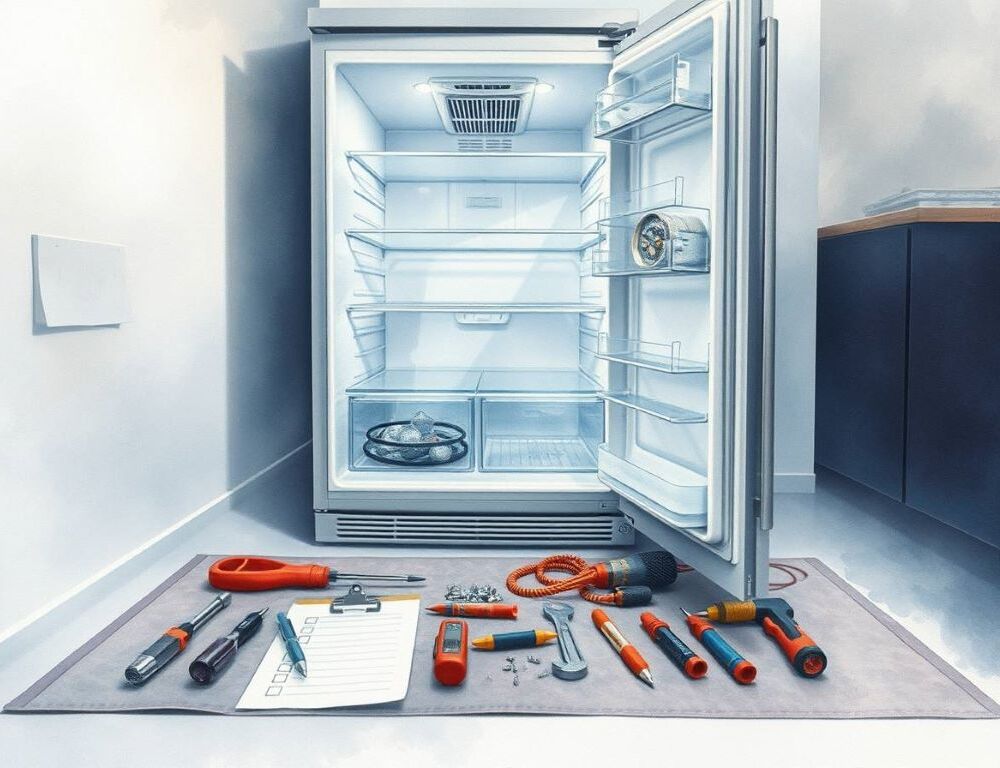
A fridge can sound busy and still do nothing useful: the light is on, the compressor hums, yet the shelves feel warmer by the hour. In Kyiv, repair pricing is rarely “one-size-fits-all”, it’s driven by the actual failure, and that’s why a solid diagnosis matters more than guessing.
What does diagnostics include, and what is safe to do first?
A typical diagnostic visit is the “small” line item, but it often decides whether the fix is simple or turns into a drawn-out hunt. A competent technician usually checks:
- Temperatures in both compartments and how often the compressor cycles.
- Frost patterns and drainage (standing water can point to airflow and defrost issues).
- Door gasket condition and airflow for No Frost models.
- Basic electrical checks for sensors, thermostat/control signals, and start components.
Before you start: safe, risky, and when to stop
- Safe: confirm the door seals properly, set a reasonable temperature, reduce overcrowding, and power-cycle (unplug for 10 minutes).
Expected result: more stable cycling; temperature begins dropping within 6–12 hours.
Rollback: restore your previous temperature setting and observe for a full day. - Risky: “topping off refrigerant,” opening the sealed system, or poking the compressor area without tools.
Stop and call service: repeated clicking every few minutes, a burning smell, or excessive heat around the compressor.
Micro-scenario: after a power outage, the fridge “runs” but doesn’t cool — diagnostics is the difference between a quick fix and burning time (and money).
Why does a fridge run but not cool?
One symptom can hide multiple failures, and each one lands in a different budget tier.
Could it be a thermostat or sensor issue?
If cooling feels inconsistent — cold for a while, then suddenly warm — the control side (thermostat/sensor) is a common culprit. Thermostat replacement cost is typically far lower than compressor work, and it often solves the problem without major disassembly.
Is airflow or defrost the real problem?
On No Frost units, weak cooling can come from blocked airflow, a stalled fan, or defrost trouble that turns into hidden ice buildup. A telltale sign: the freezer is “kind of OK,” while the fridge compartment is warm.
For a manufacturer-style logic check of common “not cooling” causes and what users can safely verify, Bosch has a short self-help list — common freezer problems and first checks.
Micro-scenario: a family fridge starts sweating around the door, then cooling drops — that’s often a gasket/air-leak story that snowballs into frost and overwork.
What about refrigerant leak symptoms — and why “just refill” is not a fix?
Refrigerant leak symptoms can include weak cooling despite long compressor runtime, odd frost patterns, and gradual worsening over days or weeks. The key point: refilling without fixing the leak is a temporary pause, not a repair.
If you want an authoritative explanation of why refrigerant handling is regulated and why sealed-system work should be done properly, EPA’s homeowner resources are a good starting point — homeowner guidance on servicing and refrigerants.
Micro-scenario: in a small office kitchen, the fridge never seems to “catch up” — sometimes it’s airflow; sometimes it’s the sealed system. Diagnostics decides which.
A quick phone script that helps you estimate the budget
If you want a realistic quote range before the technician arrives, give structured information. This reduces vague “we’ll see onsite” pricing and helps prepare parts/tools.
| Symptom | What to report on the call | What’s typically done | Typical budget tier in Kyiv |
| Not cooling, compressor runs long | Temps rising, few pauses | Diagnostics, sensor/thermostat checks | Low–medium |
| Freezer cools, fridge compartment warm | Freezer OK, fridge warm | Fan/airflow/defrost checks | Medium |
| Clicking every 1–3 minutes | Start attempts, shuts off | Start relay/power diagnostics | Low–medium |
| Heavy frost or water pooling | Frost buildup, water under drawers | Drain cleaning, gasket inspection | Low |
| Suspected leak | Weak cooling + long runtime | Leak search, sealed-system repair | High |
| Won’t start at all | Light on/off, reaction to settings | Power/control board diagnosis | Medium–high |
Expected result: you get a clearer range and the visit is faster. Rollback: if someone promises an exact price without even asking symptoms/model, ask what diagnostics includes and what could change the quote.
Simple habits that reduce failures
A lot of costly repairs begin with small stressors: dust, poor ventilation, and constant warm-air infiltration.
A short routine that pays off:
- Keep ventilation areas reasonably clean (when accessible) so the compressor doesn’t overheat.
- Don’t pack shelves “wall to wall” — airflow matters.
- Check the door seal with a paper test: it should grip when the door is closed.
- After a full defrost, don’t crank to the coldest setting; let the system stabilize for 6–12 hours.
Quick answers people ask before booking service
Why is diagnostics sometimes “free”?
Often it’s waived only if you approve the repair. If you decline, diagnostics is billed as a standalone visit.
What repairs tend to be the most expensive?
Sealed-system work and compressor repair usually sit at the top because the labor and risk are higher.
Can I know the exact price before the visit?
You can get a reasonable range with good symptom details. Exact numbers usually come after diagnostics confirms the root cause.
When does repair stop making sense?
If the sealed system or compressor is failing on an older unit, it’s worth comparing total repair cost versus replacement — not every fix is economical.
In practice, the “price question” becomes much easier once you have (1) a proper diagnosis and (2) a clear symptom description. That’s how you pay for the right fix instead of paying for guessing.