
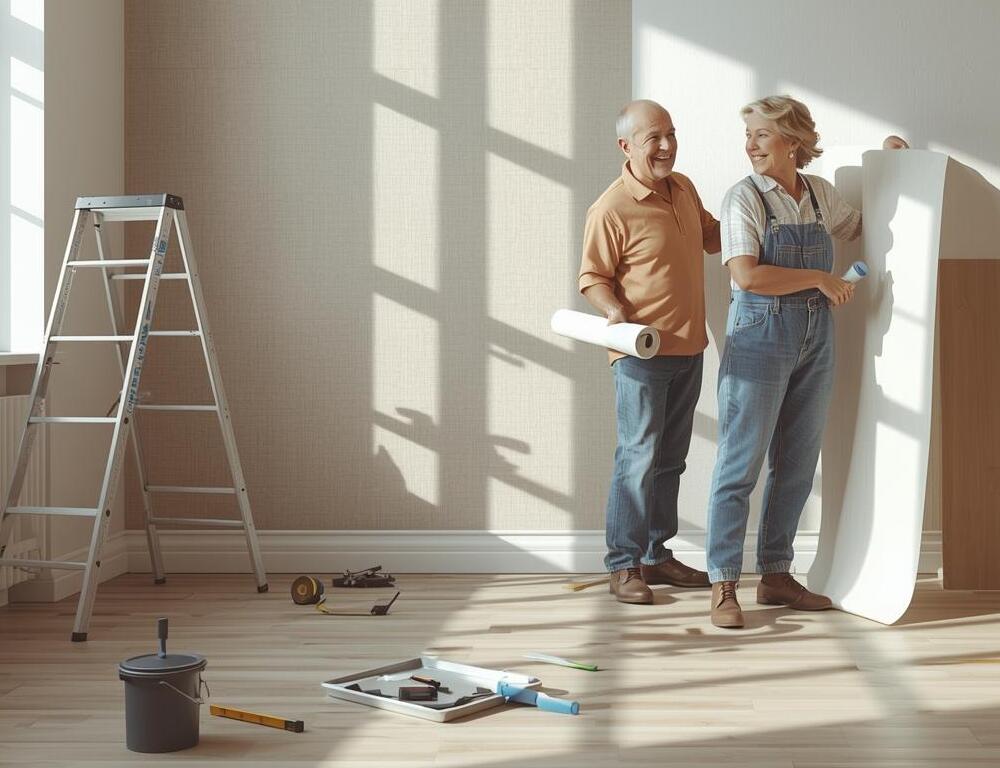
If you are working with a roll for the first time, the main question how to hang non-woven wallpaper so seams do not drift, bubbles do not appear, and the pattern matches on the first try. The good news is that non-woven backing often forgives small mistakes, but only if you follow the right prep and adhesive logic. Below is a clear plan that helps you get a neat result even without a lot of experience.
Quick Start Before You Begin
What should you know before hanging non-woven wallpaper?
The main principle is this: you apply paste to the wall, not the sheet, which is why wall prep decides half the result.
What paste should you use for non-woven wallpaper?
Use paste labeled for non-woven wallpaper or heavy-duty wallpaper so it holds the material and gives you enough working time to align.
Do you need to prime walls before wallpapering?
Yes, priming reduces suction, strengthens the surface, and helps paste spread evenly without dry spots or lifting edges.
How much time do you need for one room?
A beginner often needs 1–2 hours per wall, and a full room usually takes a day if there are no tricky corners or lots of trimming.
Wall Preparation
What should the wall be like for wallpaper to sit flat?
The surface should be dry, clean, free of dust and grease, and without obvious unevenness, or seams will “move” and shadows can appear.
Do you need skim coat under non-woven wallpaper?
If there are dents, cracks, or bumps, it is better to fill and sand, because non-woven wallpaper can hide small flaws but will not fix major defects.
Can you hang it over old wallpaper or paint?
Old wallpaper is best removed, and painted walls should be checked for adhesion: if paint is weak, remove it, and if it is solid, scuff and prime.
Why does layout matter more than it seems?
The first drops set the geometry for the whole wall. If the start drifts, you will either “steer” seams or cut the pattern, and the finish will not look clean.
Tools and Materials
What tools do you need for non-woven wallpaper?
You will need a tape measure, a level or laser, a knife with spare blades, a smoothing tool, a roller or brush for paste, a bucket, and a clean sponge.
What should you use to smooth wallpaper without damage?
For smooth wallpaper, a plastic smoother works well, and for textured finishes, use a roller or soft brush so you do not crush the relief.
Do you need a seam roller?
A narrow seam roller helps, but use it gently so you do not squeeze paste out and leave shiny marks.
Step-by-Step Hanging
Where do you start: by a window or from a corner?
Most often you start from a corner, setting the first line with a level so the pattern and seams stay straight across the room.
How do you mark the first strip correctly?
Snap a vertical line with a level, stepping off the roll width minus a small trim allowance, and follow that line precisely.
How do you apply paste to the wall?
Roll paste on in an even layer for the width of 1–1.5 strips, paying extra attention to the top and seam zones.
How do you place the sheet and avoid bubbles?
Set the top of the sheet to the wall, align to your mark, and smooth from the center outward, pushing air down and to the sides.
How do you trim the top and bottom neatly?
Press the sheet with a straight edge at the ceiling and baseboard and cut with a sharp knife along the edge, changing blades more often than you think.
What do you do with seams so they do not open?
Bring seams together edge-to-edge with no overlap, lightly roll them, and wipe any paste residue right away with a clean damp sponge.
Table: Quick Fixes by Step
| Step | What you do | What to watch |
| Prep | level, fill, and prime | the wall is solid and not dusty |
| Layout | mark a vertical line | the first strip is perfectly plumb |
| Paste | apply to the wall | an even coat with no dry patches |
| Hang | smooth from the center | no bubbles or wrinkles |
| Trim | cut against a straight edge | sharp blade, clean line |
| Seam | join edge-to-edge | seams stay closed after drying |
Common Questions and Fast Answers
Why do bubbles appear after hanging?
Most often it is trapped air or a dry paste spot. While the paste is fresh, lift gently, add paste, and smooth again.
What if the wallpaper stretches and slides down?
Usually the paste is too thin or the wall is overloaded with paste. Mix to the right thickness and do not soak the wall.
How do you hang non-woven wallpaper in corners?
Inside corners are rarely square, so wrap the sheet 1–2 cm and start the next strip from a new plumb line, not the corner itself.
How do you hang patterned wallpaper so it matches?
Cut strips with the repeat in mind, pre-match the pattern on the floor, then hang and confirm alignment before final smoothing.
Can you open windows or run heat while it dries?
Avoid drafts and overheating. Drying should be steady, or seams can open and waves can appear. In the end, a clean result comes down to three things: a flat, primed wall, the right paste, and accurate geometry on the first strip. If you do not rush and you check each step with a level, non-woven wallpaper lays flat and looks like it was done by a pro.