
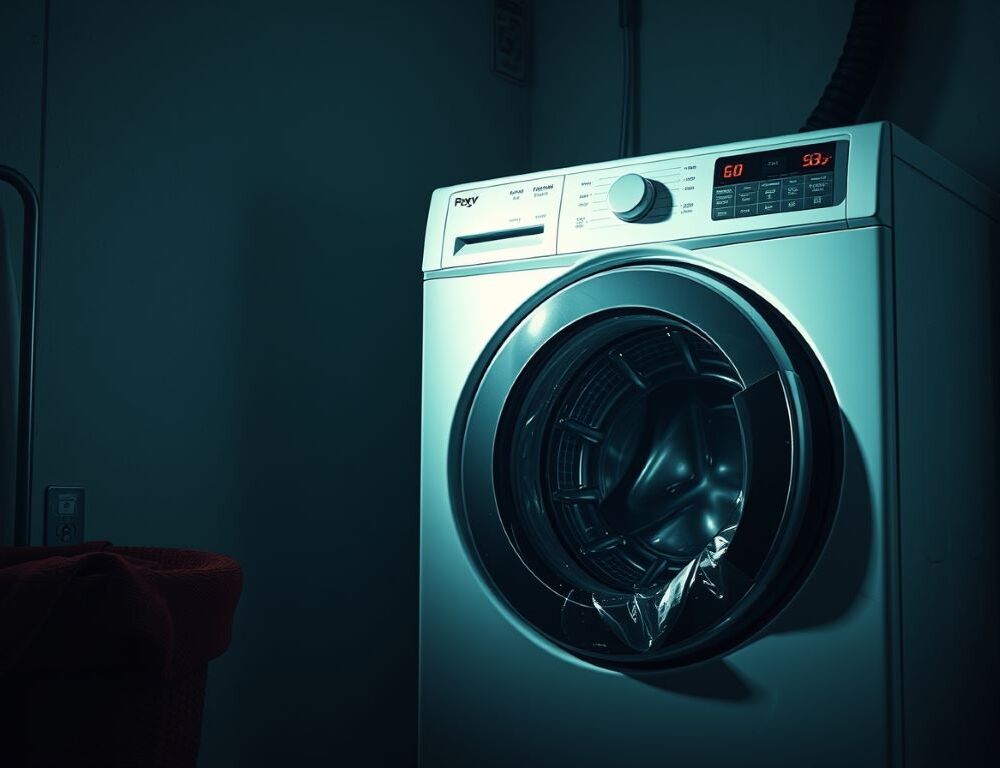
It’s one of those problems that feels bigger than it is: the cycle ends, the door is locked, and there’s a stubborn pool of water staring back at you. When a washing machine not draining in Kyiv happens, the “why” is often simple (a clog, a kinked hose, a blocked filter) — but the order you check things in matters, especially with water and electricity in the same box.
What tells you it’s a drain problem (not “everything is broken”)?
Drain issues usually follow the same chain: filter area → drain pump → drain hose → plumbing. A break anywhere can look similar, so start by observing:
- You hear a hum, but the water doesn’t move (often a blockage at the filter/pump).
- The pump is silent (power, lock state, failed pump).
- Draining is slow (filter, hose, or a clogged standpipe/sink trap).
- Water drains, then seems to come back (hose height/backflow from plumbing).
- An error mentions water/drain (helpful, but not always the full story).
Micro-scenarios:
- After a load of gym clothes in a rented flat, the washer reached “spin” and just paused with water left in the drum.
- A family wash day: the first load drained fine, the second one lagged and never spun.
- In an older building, the washer drains — then the water creeps back when someone uses the kitchen sink.
How to diagnose at home without making it worse
Start with zero-risk checks and move up only if needed. Before you open anything, unplug the washer and turn off the water supply. Manufacturers routinely advise disconnecting power before maintenance; you’ll see that kind of warning in LG documentation. Power-off guidance in an LG manual
Now follow a simple decision flow:
- If water is sitting and there’s no error → run a “Drain/Spin” cycle and listen: does the pump kick in?
Expected result: a steady pump sound and water starting to move out.
Rollback: if you hear sharp clicking or smell burning, stop the cycle and unplug. - If the pump hums but nothing drains → inspect the drain hose behind the machine: kinks, pinches, crushed sections behind furniture.
Expected result: once the hose is straight, draining improves quickly.
Rollback: if the hose leaks or has a crack, stop using it and replace the hose. - If draining is slow → check the plumbing side: a clogged trap or standpipe can mimic a washer fault.
Expected result: clearing the trap/standpipe speeds up draining.
Rollback: if you get sewer smell or overflow risk, revert the setup and call a pro. - If you’re already thinking about budget → it helps to understand how service pricing is typically built. Here’s a clear explainer on what affects washing machine repair prices in Kyiv.
Fixes by cause, from easiest to more involved
Is the pump filter area clogged?
This is the most common culprit: coins, hairpins, lint, small plastic pieces. Many washers have a small access panel at the bottom front.
- Lay down towels and place a shallow container.
- Open the panel and loosen the filter slowly to release water in stages.
- Remove debris, rinse the filter, wipe the housing.
- Re-seat the filter firmly (snug, not overtightened).
Expected result: draining becomes fast, and the spin cycle starts normally.
Rollback: if you see a drip afterward, re-check the gasket and the filter alignment.
Is the drain hose or standpipe restricting flow?
If the filter is clean but water still won’t leave, the restriction may be outside the washer.
- Detach the hose from the standpipe/sink connection and flush it carefully.
- Check the standpipe/trap for lint buildup.
- Verify the hose height is correct for your model; wrong height can cause backflow.
Expected result: water exits steadily without long pauses.
Rollback: if water starts returning to the drum, restore the previous hose height and secure it.
Does the pump sound “wrong” or stay silent?
Grinding, repeated clicking, overheating smells, or complete silence can point to a failing pump or something stuck in the impeller. Some brands tie this to specific error codes; Samsung, for example, provides a structured checklist around water/drain-related codes. Samsung’s official steps for 4E/5E and drain-related checks
Safe checks you can do:
- After clearing the filter, gently verify the impeller isn’t blocked (no force).
- Watch for signs of electrical issues (breaker trips, burning smell).
Expected result: the impeller moves freely and draining resumes.
Rollback: if a breaker trips or you smell burning, stop immediately and call a technician.
When is it time to call a technician in Kyiv?
- Hot water is trapped in the drum and the machine won’t progress.
- You smell burning, see sparks, or the breaker trips.
- You have a leak from underneath.
- The issue repeats after filter + hose + plumbing checks.
- The washer won’t drain and won’t spin (often a combined fault).
Quick questions people ask when the washer won’t drain
Why does it hum but not drain?
Usually the pump is trying to work but can’t move water through a blockage. If cleaning the filter doesn’t change anything, continued attempts can overheat the pump.
Not directly, but a stuck program can look like multiple failures at once. A drain failure can block spinning, which makes the whole cycle feel “broken.”
Most drain problems resolve at the filter-and-hose level. If they don’t, you’ll still be in a strong position: you’ve checked the safe basics, documented symptoms, and can describe the issue clearly to a technician.