
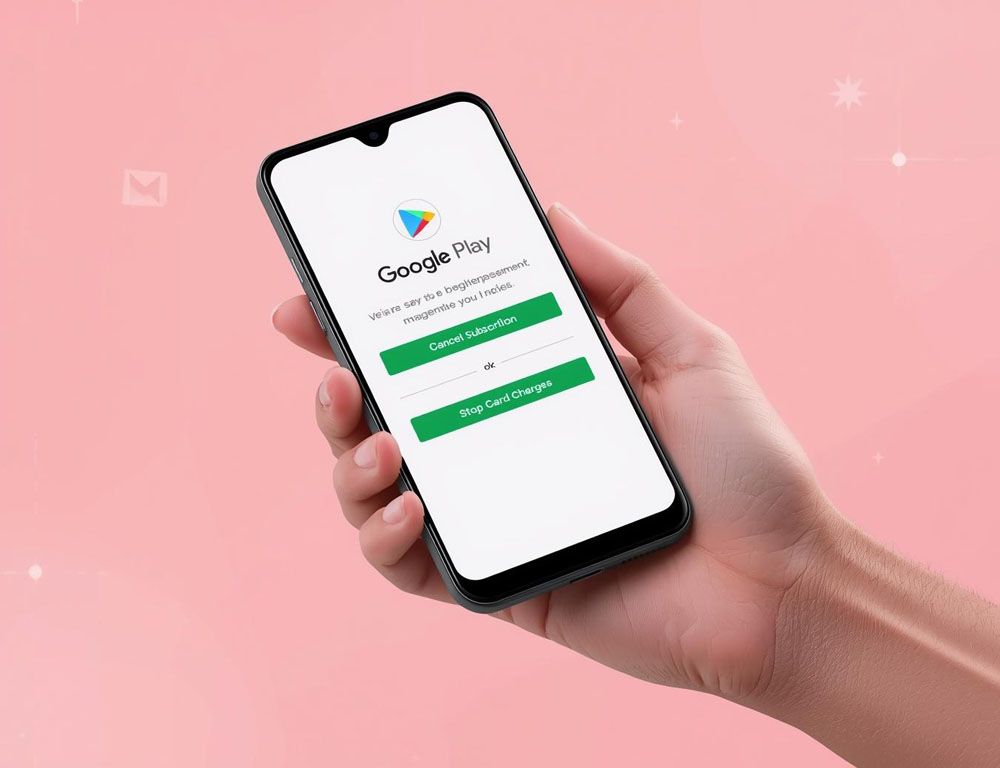
There is a weird moment when a charge shows up in a banking app and only one question appears: what exactly took the money. In most cases it is not fraud, but a normal Google Play subscription that quietly renewed after a trial or after the previous billing cycle. The most annoying part is that deleting the app from the phone does not solve anything. The subscription is tied to the Google account, not the icon on the screen. So, how do I turn off auto-renewal and how do I cancel my subscription on Google Play?
- Where to Find Google Play Subscriptions in 30 Seconds
- How to Turn Off Google Play Subscription Auto Renewal Without Surprises
- Google Play subscriptions are not visible or there is no cancel button: what to do
- How to Find Out What Charged You in Google Play
- How to Get a Refund for a Google Play Subscription: A Realistic Plan
- Small Rules That Prevent “Quiet” Charges
- Quick Answers to Common Questions
Where to Find Google Play Subscriptions in 30 Seconds
To see active subscriptions in Google Play, it helps to follow the standard path inside the Play Store:
- Open Google Play
- Tap the profile icon in the top right
- Choose “Payments and subscriptions”
- Open “Subscriptions”
This list usually shows the key details: the service name, the subscription status, and the next charge date. If there are multiple subscriptions, it makes sense to start with the one that renews the soonest. That removes the risk of another charge happening first.
Why Deleting an App Does Not Cancel a Subscription
A subscription lives in account settings. An app can be deleted, a phone can be replaced, but recurring billing keeps running until it is canceled in Google Play. It is like a membership: the door can stay closed, but the membership bill still arrives.
How to Turn Off Google Play Subscription Auto Renewal Without Surprises
To turn off auto renewal, open the specific subscription from the list and tap “Cancel”. After confirmation, auto renewal is disabled and new charges should stop.
There is a detail that often scares people: the subscription does not always disappear right away. In many services, access stays active until the end of the already paid period, but the next renewal will not happen. That is normal behavior, not “it only half canceled”.
What to Check After Canceling
To feel confident and not revisit this tomorrow, it helps to confirm two things:
- the subscription shows a status like “canceled” or “expires” on a specific date
- the next charge date no longer shows a future payment
Sometimes the “Subscriptions” screen is empty even though the card was charged. Or the subscription exists, but looks “off”, and the cancel option cannot be found. Most of the time the reason is simple, just not obvious.
Check Another Google Account
The most common scenario is that the subscription was purchased on a different account than the one currently open in Google Play. A phone can hold multiple profiles: main, work, backup. Switching accounts in Google Play and repeating the steps to “Subscriptions” often solves it.
A real-life tip: if there are payment emails in the inbox, they usually show which account made the purchase. That is faster than guessing.
Confirm It Is Actually a Google Play Subscription
Some services do not bill through Google Play at all. They sell subscriptions directly on their website or through another payment system. In that case it will not appear in Google Play “Subscriptions”. Bank transaction details can help here, because the merchant name sometimes points to where subscription management lives.
Consider Family Purchases
If family payments are enabled or multiple people use the same card, someone else may have purchased the subscription. Then the cancellation must be done from the buyer’s Google account, even if the card owner is the one seeing the charge.
How to Find Out What Charged You in Google Play
When the charge already happened, guessing is the worst strategy. Facts work better. Three things matter: the date, the amount, and the transaction name. Next, checking purchase history in Google Play helps confirm whether there is an order for that exact amount. If nothing shows up, it usually means one of two things: a different Google account was used, or the subscription was purchased outside Google Play.
This quick step saves stress, because it replaces “nothing was subscribed to” with “here is the service, here is the account, here is the date”.
How to Get a Refund for a Google Play Subscription: A Realistic Plan
Refunds are not guaranteed, but the odds improve with quick, consistent action. The logic that tends to work best looks like this:
- Cancel the subscription first, so there are no repeat charges
- Submit a refund request in Google Play and explain the situation briefly and clearly
- If the refund is denied, contact the support team of the service that received the payment
It helps to avoid long emotional stories in the request. A simple statement is enough: the charge was an unwanted renewal or an accidental payment, the subscription has been canceled, and a refund is requested.
How Long a Refund Can Take
The exact timing depends on the payment method and the bank. Sometimes money returns quickly, sometimes it takes a few days. If the refund is approved, it helps to give the bank time to process it instead of refreshing the balance every five minutes.
Small Rules That Prevent “Quiet” Charges
Right after starting a trial, it helps to open subscriptions and check the next charge date. If the service is only needed short term, auto renewal can be canceled immediately. In many cases, access stays until the end of the trial anyway, while the chance of a card surprise drops close to zero. Another easy habit is to open the Google Play subscriptions list once a month and do a quick cleanup. It takes two minutes, and that is often cheaper than one forgotten subscription.
Quick Answers to Common Questions
Yes, subscription management is also available on the web, as long as the same Google account is used. The logic is the same: find subscriptions and turn off renewals.
It helps to compare the cancellation date with the charge date. If the charge falls within an already paid period, it can look like “it charged after canceling” even though it was payment for the previous cycle. If the charge is new and unexpected, a refund request makes sense, and checking other accounts in parallel is smart.
The transaction name can show the developer name or a billing profile, not the app’s brand name. That is why purchase history details are usually the best place to verify what the charge was.