
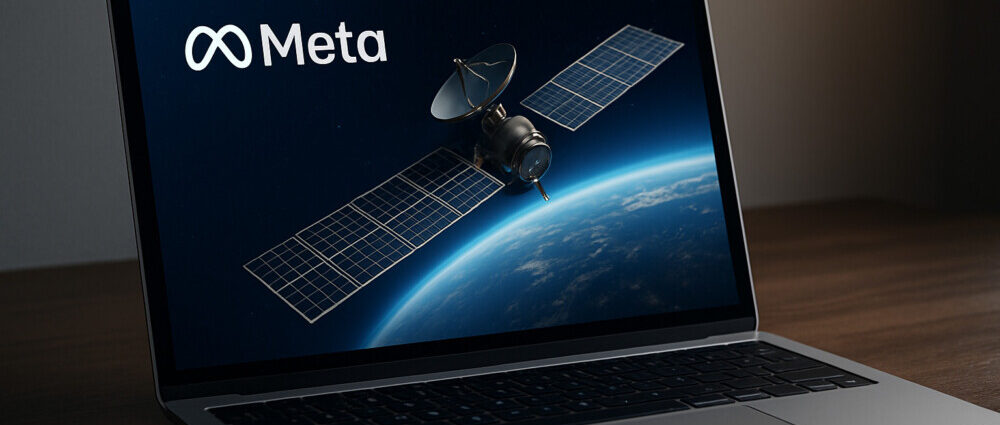
Meta has signed an initial agreement with Overview Energy for space-based solar power, marking a notable test of whether electricity collected in orbit and transmitted to Earth could become part of future energy supply for large data center operators.
The reported deal is small, but the change that matters is who is buying. Meta joins the list of major technology companies exploring unconventional power sources as AI infrastructure pushes electricity demand higher and clean power becomes harder to secure at the scale and reliability they want.
What changed
Overview Energy says its first contract with Meta covers a future supply arrangement tied to space-based solar power. The concept is to gather solar energy in space, where panels can receive sunlight continuously for much longer periods than on Earth, and then beam that energy down for use on the ground.
The headline claim is nighttime delivery. That is the core difference from conventional solar: a space-based system could in theory provide power after sunset, helping address one of the biggest limits of terrestrial solar generation.
Why this matters
For Meta, the significance is less about near-term volume and more about optionality. Data centers need firm, around-the-clock power, and companies building AI capacity are increasingly looking beyond standard wind-and-solar procurement to fill expected gaps.
For the energy sector, the agreement is another sign that hyperscalers are willing to back technologies that are still early if they offer a credible path to carbon-free electricity at hard-to-serve hours. A contract with a buyer like Meta can also help a startup validate demand even before commercial-scale deployment exists.
Space-based solar power has been discussed for decades, but cost, launch economics, transmission efficiency, and regulatory questions have slowed progress. A small commercial deal does not solve those issues, but it shows buyers are at least prepared to explore them.
What users and observers should check next
- Project timeline: Watch for when Overview Energy expects to demonstrate and then deliver power under the agreement.
- Delivery method: Check how the company plans to transmit energy from orbit and what safeguards or approvals will be required on the ground.
- Scale: The first contract is described as small, so the key question is whether the approach can move beyond pilot levels to meaningful grid or data center supply.
- Economics: Future updates on launch costs, conversion losses, and delivered power pricing will determine whether this is a serious energy option or a long-shot experiment.
- Meta’s broader power strategy: Investors, developers, and enterprise buyers should view this alongside Meta’s other clean energy and data center power procurement moves, not as a standalone replacement for existing sources.
The practical takeaway
Meta’s agreement with Overview Energy does not mean space-based solar power is ready for mainstream deployment. It does mean one of the world’s largest tech companies is willing to place an early bet on a technology aimed at delivering carbon-free electricity when ground-based solar cannot. The next milestones to watch are proof of transmission, regulatory progress, and whether the economics improve enough to justify larger contracts.