
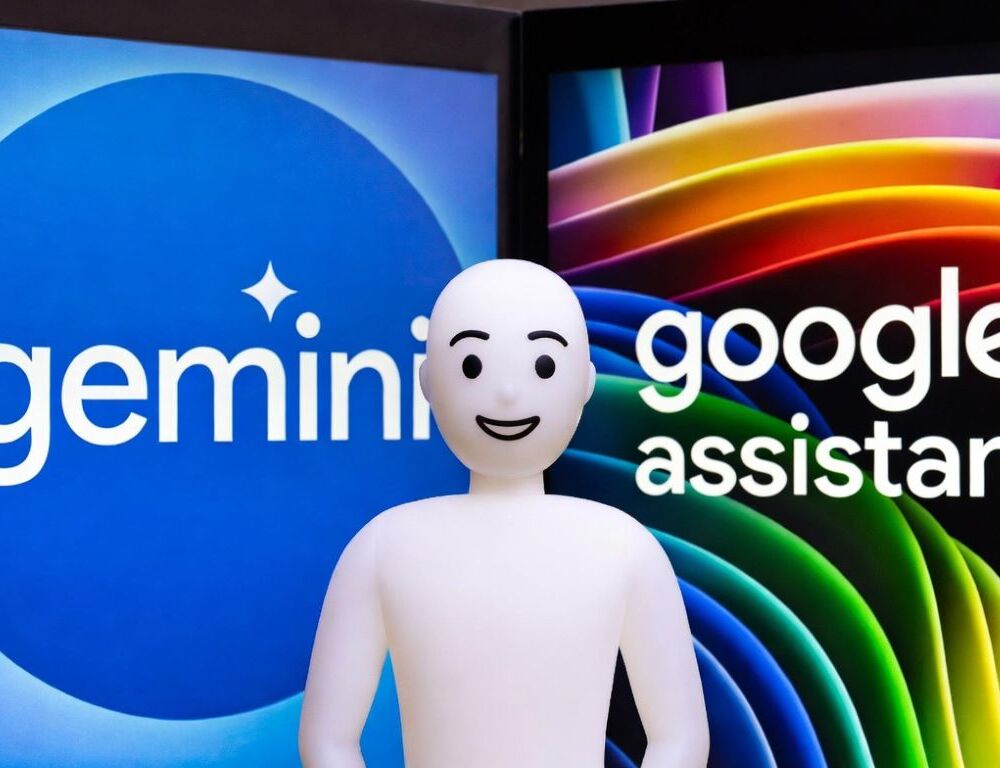
The best way to choose between Gemini and Google Assistant is not to ask which one sounds more advanced. It is to match the assistant to the work you repeat every day. If you mostly want short voice commands, music control, timers, and fast hands-free actions, one choice will usually feel smoother. If you more often want explanation, follow-up refinement, planning, and long-context dialogue, the better fit may be different.
The easiest way to avoid a bad choice is to test both assistants on the same real tasks. Once the conditions stay the same, the difference becomes practical instead of theoretical.
- Quick answer: when Gemini is better, and when Google Assistant is better
- What 3 tests actually help you choose
- Where Google Assistant still feels better in everyday use
- When Gemini is better than Google Assistant for complex requests
- When switching to Gemini actually saves time
- How Gemini and Google Assistant overlap instead of living in separate worlds
- How “Hey Google” works, and how to switch back if needed
- What device requirements and availability really matter
- What mistakes should you avoid when comparing them
Quick answer: when Gemini is better, and when Google Assistant is better
| Scenario | More practical choice most of the time |
| Timers, alarms, short commands | Google Assistant |
| Smart home control and quick media actions | Usually Google Assistant |
| Long explanations and follow-up dialogue | Gemini |
| Many constraints in one request | Gemini |
| Repetitive voice actions | Google Assistant |
| Drafts, plans, summaries, and rewrites | Gemini |
If you want one short verdict, Google Assistant is usually smoother for fast voice actions, while Gemini usually feels stronger in longer dialogue and multi-step responses. That is often enough to eliminate the wrong fit quickly.
What 3 tests actually help you choose
A fair comparison keeps the task, language, trigger method, and phrasing as stable as possible. If you change several things at once, it becomes hard to tell what actually caused the difference.
Use these three checks:
- a short command, such as a timer, alarm, call, or message
- a multi-step request, such as a 5-part day plan plus one extra condition
- a mid-chat correction, where you change one rule and ask for a clean rebuild without losing the rest
After that, do not judge by first impressions. Judge by which assistant needs fewer repeated prompts, gives you the action faster, and leaves less cleanup behind. That is where the real comparison becomes useful.
Where Google Assistant still feels better in everyday use
Google Assistant usually feels stronger when the job is short, direct, and repeatable. That includes timers, alarms, app launches, calls, music, simple routines, and part of the smart home workflow. In those cases, the main goal is not depth. It is reliable execution of a short command.
At the same time, Gemini on Android can already handle some quick actions too, including things like sending a message or turning on lights when everything is set up correctly. But according to Google Help, when Gemini is your primary mobile assistant, some Google Assistant features and services do not carry over in exactly the same way. That matters most if you rely on very short voice commands with no extra dialogue.
If your day depends on frictionless voice control, the fairest test is to compare timers, music, routines, lights, and one more everyday action under the same conditions. That is where Google Assistant often keeps its practical edge.
When Gemini is better than Google Assistant for complex requests
Gemini usually pulls ahead when the task is no longer one short instruction, but a request with multiple conditions, alternatives, and follow-up changes. That can mean planning your day, explaining a decision, rebuilding a response after one rule changes, or holding a longer conversation without dropping earlier details.
In the Google DeepMind Gemini 1.5 report, the team states that Gemini 1.5 Pro achieved over 99.7% “needle” retrieval up to 1M tokens of context and maintained near-perfect retrieval when extended to 10M tokens. For a normal user, the point is not the benchmark itself. The point is that Gemini is naturally better suited to tasks where many constraints need to stay alive across a longer exchange.
A quick baseline is How to Use Google Gemini. That is especially useful if you want to judge long-context dialogue quality rather than just the first answer.
When switching to Gemini actually saves time
Switching to Gemini usually pays off not when you ask one quick question, but when one task creates two or three follow-up steps. For example, you ask for a plan, then shorten it, then rewrite it in a different tone, then ask for two reply options. In workflows like that, the better assistant is the one that cuts down your manual rework from step to step.
In the same Google DeepMind Gemini 1.5 report, the authors describe real use cases with 26% to 75% time savings across 10 job categories. That does not mean every user will see the same gain, but it does help explain why Gemini often feels stronger in productivity-style tasks than in one-shot command execution.
If your daily work involves planning, drafting, summaries, and iterative refinement, time saved on rework is usually the clearest reason to move toward Gemini. That is where the switch starts to feel justified in practice.
How Gemini and Google Assistant overlap instead of living in separate worlds
One of the biggest comparison mistakes is treating Gemini and Google Assistant as fully separate products with no overlap. In practice, it is more complicated. Google Help explains that when you use Gemini as your primary mobile assistant on Android, other devices with Google Assistant built in, such as smart displays, speakers, TVs, cars, or Pixel Tablet, can still remain directly powered by Google Assistant.
So in many cases, this is not a complete one-for-one swap. It is a change to the mobile assistant experience on your phone, while other Google Assistant-powered devices continue working in their own way. If you also use smart home devices or other Google hardware, it is more useful to think of Gemini and Google Assistant as partially overlapping roles.
To rule out the most common causes fast, use Google AI Mode vs Gemini: What Is the Practical Difference Between AI Search And an Assistant?. That clears up another common confusion before you judge the assistants themselves.
How “Hey Google” works, and how to switch back if needed
On Android, “Hey Google” behavior depends on which digital assistant is set as primary and how your trigger method is configured. If you choose Gemini instead of Google Assistant, activation can work through “Hey Google” or through a long press of the power button, depending on your phone settings.
The most useful way to test this is with two triggers, voice and your usual button or gesture. Then run one short command, such as a timer, and one explanation-style command, such as planning or choosing between options. That quickly shows which assistant is actually opening and what kind of response style you are getting.
A short checklist of symptoms and fixes is in Disable Google Gemini and Switch Back to Google Assistant. That is easier than searching through several menus blindly when you already know your goal.
What device requirements and availability really matter
A lot of bad comparisons break before the test even starts, because users treat a device, region, or language limitation as if it were an assistant-quality problem. According to current Google Help documentation, the Gemini mobile app on Android generally requires Android 9 or later, at least 2 GB of RAM, and is not supported on Android Go. Availability also depends on country and language.
That leads to one very practical rule: if Gemini is missing, unstable, or showing different features than expected, do not judge the assistant before you check the baseline requirements. Sometimes the real issue is not the assistant itself, but the setup or the transition between assistant modes.
What mistakes should you avoid when comparing them
Most bad comparisons come from poor method, not from the assistants themselves. Avoid these traps:
- testing with one vague prompt and no measurable goal
- changing the language, trigger method, and task type at the same time
- treating speed as proof of quality on multi-step tasks
- mixing AI search, chatbot use, and mobile assistant use in one test
When the setup, tasks, and success criteria stay the same, the difference between Gemini and Google Assistant becomes much easier to judge. That is when the final choice starts to feel obvious instead of messy.
Sources:
- Google DeepMind, Gemini 1.5: Unlocking multimodal understanding across millions of tokens of context, 2024
- Google Help, Gemini mobile app availability – Android, n.d.
- Google Help, Get started with the Gemini mobile app – Android, n.d.
- Google Help, What you can do with your Gemini mobile app – Android, n.d.
- Google on Android, Gemini Mobile App infosheet, n.d.