
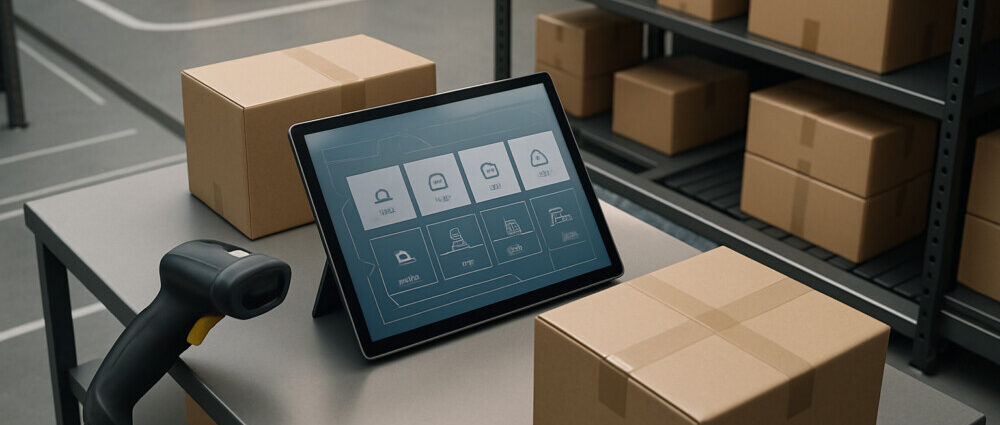
Third party logistics software is the operating layer that helps 3PL companies run warehousing, order fulfillment, inventory control, shipping, and client reporting in one connected system. For most providers, the real value is not just automation; it is having fewer manual handoffs, better visibility across customers, and cleaner data for billing and service performance.
A good platform should fit the way a 3PL actually works: multiple clients, different service rules, changing carrier needs, and constant pressure to move faster without losing accuracy.
Third party logistics software manages the core work of a 3PL
Third party logistics software manages receiving, storage, picking, packing, shipping, returns, and account-level reporting across multiple customers. It usually combines warehouse execution with order management, inventory tracking, carrier connectivity, and billing tools so teams can work from the same source of truth.
Some platforms are built mainly for warehouse operations, while others extend into transportation, customer portals, EDI, rate shopping, and analytics. The right scope depends on whether your business is focused on fulfillment, freight coordination, omnichannel retail, B2B distribution, or a mix of services.
- Inventory visibility by client, SKU, lot, or location
- Order routing and fulfillment workflows
- Barcode scanning and warehouse task management
- Carrier integration, label generation, and shipment tracking
- Returns processing and exception handling
- Contract billing, storage fees, and activity-based charges
- Customer dashboards and operational reporting
Key features matter most when they support multi-client operations
Key features in third party logistics software matter most when they support the complexity of running several customer accounts at once. A standard warehouse app may handle inventory well, but a 3PL platform needs stronger controls for client separation, custom workflows, and flexible billing.
Multi-tenant account structure keeps customer operations separate
Multi-tenant account structure keeps customer data, pricing, workflows, and reporting separate while allowing one operations team to manage everything centrally. This is essential for avoiding cross-account errors and for giving each client the right level of visibility.
Billing automation protects margin
Billing automation protects margin by turning warehouse activity into invoice-ready charges with less manual cleanup. Look for support for storage, pick-pack fees, receiving, kitting, returns, inserts, and custom contract rules.
Integrations reduce manual rekeying
Integrations reduce manual rekeying by connecting marketplaces, shopping carts, ERPs, carrier systems, and EDI partners. Strong integration support matters more than a long feature list if your team currently spends hours moving data between systems.
Real-time visibility improves service
Real-time visibility improves service because warehouse teams, account managers, and clients can all see order status, inventory changes, and shipment progress without waiting for spreadsheet updates. That visibility also makes disputes easier to resolve.
Choosing third party logistics software starts with your operating model
Choosing third party logistics software starts with your operating model, not with vendor marketing. A fast-growing ecommerce fulfillment provider needs different capabilities than a 3PL focused on pallet storage, wholesale distribution, or temperature-sensitive inventory.
Use these questions to narrow the field:
- How many clients, orders, and warehouse locations do you support today?
- Which sales channels, ERPs, and carriers must connect on day one?
- Do you need parcel fulfillment, freight workflows, or both?
- Which billing rules are too complex to manage manually?
- Do clients need self-service dashboards or custom reports?
- Will warehouse staff use mobile scanners, tablets, or fixed stations?
- Can the system handle peak-season volume without slowing down?
Short demos are rarely enough. Ask vendors to show your real workflows, including receiving, exceptions, returns, and invoicing. If possible, test one client account with sample orders and billing scenarios before signing a long contract.
Implementation succeeds when data and process cleanup happen early
Implementation succeeds when data and process cleanup happen early, because bad SKU data, inconsistent locations, and unclear client rules can undermine even strong software. Most rollout problems come from process gaps rather than from the platform itself.
A practical rollout usually includes master data setup, location mapping, barcode standards, user permissions, integration testing, and invoice validation. If you are replacing spreadsheets or several disconnected tools, define which system will own each data point before go-live.
A simple way to verify whether implementation is working is to run a controlled pilot with a small customer set. Check inventory accuracy, order turnaround time, scan compliance, and whether billed charges match contracted services. If those numbers are off, pause expansion and fix mapping, workflow logic, or billing rules before onboarding more volume.
Data migration can be risky if historical inventory or pricing records are incomplete. A safer first step is to import a limited dataset and reconcile it against physical stock and recent invoices.
The best third party logistics software improves accuracy, speed, and client trust
The best third party logistics software improves accuracy, speed, and client trust by making operations more consistent and easier to measure. Teams spend less time chasing updates, clients get better visibility, and finance has cleaner inputs for invoicing.
That does not mean the biggest platform is always the best one. The strongest choice is usually the system that matches your service model, connects cleanly to your existing stack, and handles billing and client separation without workarounds. For a 3PL, software should make growth easier, not add another layer of manual exception handling.